
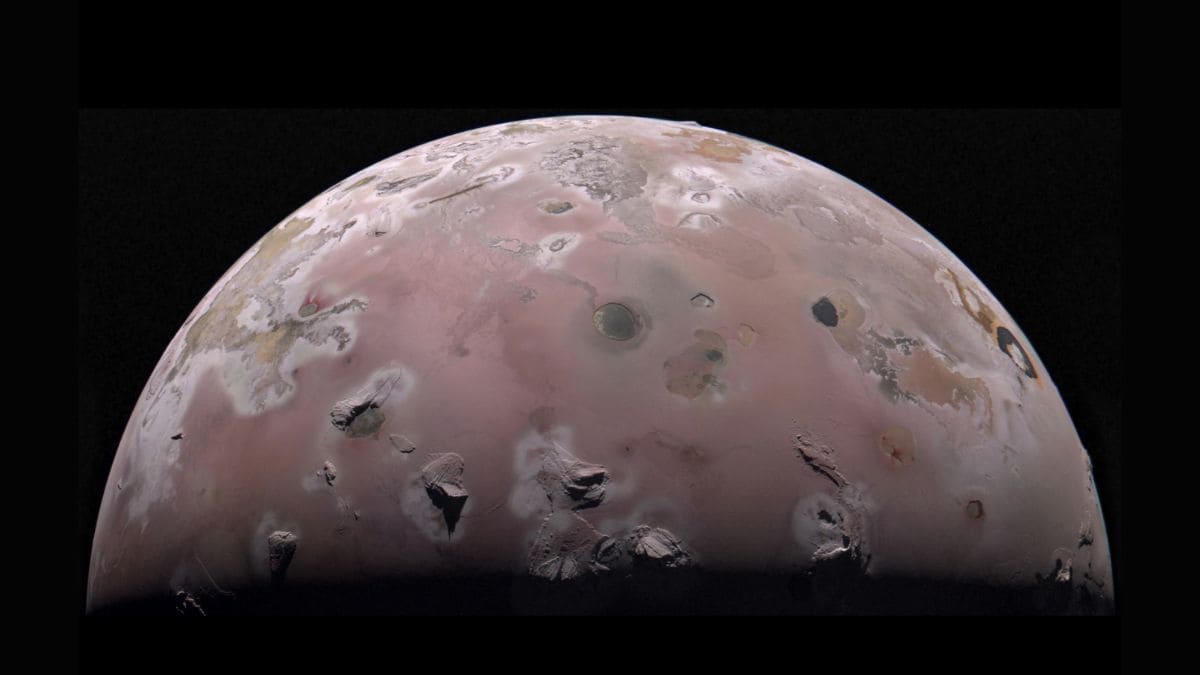
NASA’s Juno spacecraft, in orbit round Jupiter, had an enormous downside when its JunoCam imager began to fail after sitting by way of the planet’s harsh radiation belts for therefore many orbits. Designed to solely final by way of the preliminary few orbits, JunoCam astonishingly endured 34 orbits. But by the forty seventh orbit, the results of radiation injury turned seen, and by the 56th orbit, photographs had been nearly illegible. With few alternate options and time slipping away earlier than an in depth flyby of Jupiter’s volcanic moon Io, engineers made a daring however artistic gamble. Using an annealing course of, they sought to resuscitate the imager by warming it up—an experiment that proved profitable.
Lengthy-distance repair
According to NASA, JunoCam’s digital camera resides outdoors the spacecraft’s radiation-shielded inside and is extraordinarily susceptible. After a number of orbits, it began creating injury considered attributable to a failing voltage regulator. From a distance of a whole bunch of thousands and thousands of miles, the mission staff carried out a last-ditch restore: annealing. The method, which topics supplies to warmth in an effort to heal microscopic defects, is poorly understood however has been succeeding within the lab. By heating the digital camera to 77°F, scientists wished to reorient its silicon-based components.
At first, efforts had been for naught, however solely days earlier than the December 2023 flyby of Io, the digital camera unexpectedly recovered—restoring close-to-original picture high quality simply in time to {photograph} beforehand unseen volcanic landscapes.
Radiation Classes for the Future
Although the digital camera confirmed renewed degradation throughout Juno’s 74th orbit, the profitable restoration has led to broader purposes. The staff has since utilized related annealing methods to different Juno devices, serving to them stand up to harsh circumstances longer. Juno’s findings are actually informing spacecraft design throughout the board. “We’re studying how you can construct radiation-tolerant techniques that profit each protection and business satellites,” stated Juno’s principal investigator Scott Bolton. These findings would inform future missions, comparable to these visiting outer planets or working in high-radiation environments close to Earth, within the Van Allen belts. Juno’s mission continues to pay dividends with surprising improvements—a lesson in how a small quantity of warmth can do wonders.